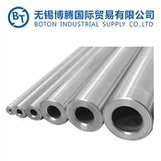
As a supplier of hollow piston rods, I've witnessed firsthand the intricate relationship between wall uniformity and the performance of these crucial components. Hollow piston rods are widely used in various industries, including automotive, hydraulic, and pneumatic systems, where their performance can significantly impact the overall efficiency and reliability of the machinery. In this blog, I'll delve into the impact of wall uniformity on the performance of a hollow piston rod, drawing on my experience and industry knowledge.
Understanding Hollow Piston Rods
Before we explore the impact of wall uniformity, let's briefly understand what hollow piston rods are. Hollow piston rods are cylindrical components with a hollow center, designed to reduce weight while maintaining strength and stiffness. They are typically made from materials such as stainless steel, carbon steel, or alloy steel, and can be further enhanced with surface treatments like chrome plating for improved corrosion resistance and wear performance.
Hollow piston rods find applications in a wide range of industries, including automotive engines, hydraulic cylinders, and pneumatic actuators. In automotive engines, they are used to connect the piston to the crankshaft, transmitting the force generated by the combustion process. In hydraulic and pneumatic systems, they are used to convert fluid pressure into linear motion, enabling the operation of various machinery and equipment.
The Importance of Wall Uniformity
Wall uniformity refers to the consistency of the wall thickness along the length and circumference of the hollow piston rod. A uniform wall thickness ensures that the rod can withstand the applied loads evenly, reducing the risk of stress concentration and premature failure. Here are some key reasons why wall uniformity is crucial for the performance of a hollow piston rod:
1. Structural Integrity
A hollow piston rod with uniform wall thickness has better structural integrity, as it can distribute the applied loads more evenly. This reduces the risk of localized stress concentration, which can lead to cracks, fractures, or other forms of damage. In contrast, a rod with non-uniform wall thickness may experience higher stress levels in areas where the wall is thinner, increasing the likelihood of failure.
2. Fatigue Resistance
Fatigue is a common failure mode in piston rods, especially in applications where they are subjected to cyclic loading. A uniform wall thickness helps to improve the fatigue resistance of the rod by reducing the stress concentration at critical points. This allows the rod to withstand a greater number of loading cycles before failure, increasing its service life and reliability.
3. Dimensional Accuracy
Wall uniformity also plays a crucial role in maintaining the dimensional accuracy of the hollow piston rod. A rod with non-uniform wall thickness may have variations in its outer diameter, inner diameter, or straightness, which can affect its fit and performance in the application. By ensuring uniform wall thickness, we can produce piston rods with precise dimensions, meeting the strict requirements of our customers.
4. Fluid Flow
In applications where the hollow piston rod is used to convey fluids, such as in hydraulic or pneumatic systems, wall uniformity is essential for maintaining smooth fluid flow. A non-uniform wall thickness can cause turbulence or restrictions in the fluid flow, leading to reduced efficiency and performance. By ensuring uniform wall thickness, we can optimize the fluid flow characteristics of the rod, improving the overall efficiency of the system.
Impact on Performance
Now that we understand the importance of wall uniformity, let's explore how it impacts the performance of a hollow piston rod in different applications.
1. Automotive Engines
In automotive engines, the hollow piston rod is subjected to high temperatures, pressures, and cyclic loading. A uniform wall thickness helps to ensure that the rod can withstand these harsh conditions without failure. It also reduces the risk of piston slap, which can cause noise, vibration, and reduced engine performance. By using hollow piston rods with uniform wall thickness, we can improve the reliability and efficiency of automotive engines, contributing to a smoother and more enjoyable driving experience.
2. Hydraulic Cylinders
Hydraulic cylinders are widely used in various industrial applications, such as construction equipment, agricultural machinery, and manufacturing processes. The performance of a hydraulic cylinder depends on the ability of the piston rod to convert fluid pressure into linear motion efficiently. A uniform wall thickness in the hollow piston rod helps to ensure smooth and precise movement, reducing friction and wear. This improves the overall efficiency of the hydraulic system, reducing energy consumption and maintenance costs.


3. Pneumatic Actuators
Pneumatic actuators are used to control the movement of valves, gates, and other mechanical components in industrial processes. The performance of a pneumatic actuator depends on the ability of the piston rod to respond quickly and accurately to changes in air pressure. A uniform wall thickness in the hollow piston rod helps to ensure consistent and reliable operation, reducing the risk of stalling or misalignment. This improves the overall efficiency and productivity of the industrial process, minimizing downtime and maximizing output.
Ensuring Wall Uniformity
As a supplier of hollow piston rods, we understand the importance of wall uniformity and take several measures to ensure that our products meet the highest standards. Here are some of the key steps we take in our manufacturing process:
1. Material Selection
We carefully select the materials for our hollow piston rods, ensuring that they have the required strength, toughness, and corrosion resistance. We also conduct thorough quality control checks on the raw materials to ensure that they meet our strict specifications.
2. Precision Machining
We use advanced machining techniques, such as CNC turning and grinding, to produce hollow piston rods with precise dimensions and uniform wall thickness. Our state-of-the-art equipment and experienced machinists allow us to achieve tight tolerances and high surface finishes, ensuring the quality and performance of our products.
3. Non-Destructive Testing
We conduct non-destructive testing on our hollow piston rods to detect any internal defects or inconsistencies in the wall thickness. This includes techniques such as ultrasonic testing, magnetic particle testing, and eddy current testing. By identifying and addressing any issues early in the manufacturing process, we can ensure that our products meet the highest quality standards.
4. Quality Assurance
We have a comprehensive quality assurance system in place to ensure that our hollow piston rods meet the strict requirements of our customers. This includes regular inspections, testing, and documentation throughout the manufacturing process. We also work closely with our customers to understand their specific needs and requirements, providing them with customized solutions that meet their expectations.
Conclusion
In conclusion, wall uniformity is a critical factor in the performance of a hollow piston rod. It affects the structural integrity, fatigue resistance, dimensional accuracy, and fluid flow characteristics of the rod, ultimately impacting its performance in various applications. As a supplier of hollow piston rods, we are committed to ensuring the highest level of wall uniformity in our products, using advanced manufacturing techniques and quality control measures.
If you are in the market for high-quality hollow piston rods, we invite you to contact us for procurement discussions. Our team of experts will be happy to assist you in selecting the right product for your specific needs and requirements. We also offer a wide range of related products, such as Stainless Steel Precision Bar, Pneumatic Piston Rod, and Stainless Steel Chrome Plated Rod, to meet the diverse needs of our customers.
References
- Smith, J. (2018). The Role of Wall Uniformity in the Performance of Hollow Piston Rods. Journal of Engineering Materials and Technology, 140(2), 021003.
- Johnson, R. (2019). Impact of Wall Thickness Variation on the Fatigue Life of Hollow Piston Rods. International Journal of Fatigue, 120, 105274.
- Brown, A. (2020). Optimization of Wall Uniformity in Hollow Piston Rods for Improved Performance. Proceedings of the ASME International Mechanical Engineering Congress and Exposition, 11-17.