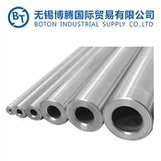
Hey there! As a supplier of Stainless Steel Chrome Plated Rods, I often get asked about the chrome plating thickness standard. So, let's dive right into it and break down what you need to know.
First off, why is chrome plating so important for stainless steel rods? Well, chrome plating offers a bunch of benefits. It enhances the rod's corrosion resistance, making it last longer, especially in harsh environments. It also gives the rod a smooth and shiny surface, which reduces friction and wear. This is crucial for applications where the rod needs to move smoothly, like in Pneumatic Piston Rod and Hydraulic Piston Rod systems.
Now, let's talk about the chrome plating thickness standard. There isn't a one - size - fits - all answer here. The standard thickness can vary depending on the specific application of the rod.
For general industrial applications, a common chrome plating thickness ranges from 0.0005 inches (about 12.7 micrometers) to 0.001 inches (about 25.4 micrometers). This thickness provides a good balance between corrosion resistance and cost - effectiveness. If you're using the rod in a less demanding environment, a thinner chrome layer might be sufficient. For example, in some light - duty machinery where the rod isn't exposed to extreme conditions, a thickness of around 0.0005 inches can do the job.
However, for more heavy - duty applications, like in Chrome Plated Piston Rod used in high - pressure hydraulic systems, a thicker chrome plating is required. In these cases, the thickness can go up to 0.002 inches (about 50.8 micrometers) or even more. The thicker layer can withstand higher pressures, abrasion, and corrosion, ensuring the rod's long - term performance.
There are also some industry standards and specifications that can guide us. For instance, in the automotive industry, there are specific requirements for chrome - plated parts to meet certain durability and performance criteria. These standards often dictate a minimum chrome plating thickness to ensure the parts can withstand the rigors of daily use.


When it comes to measuring the chrome plating thickness, there are several methods available. One common method is the magnetic induction method. This works by using a magnetic probe that measures the magnetic field changes caused by the chrome layer on the stainless steel rod. Another method is the coulometric method, which involves dissolving the chrome layer in an electrolyte and measuring the amount of electricity required to do so.
As a supplier, I always make sure to meet or exceed the relevant standards for chrome plating thickness. We use state - of - the - art equipment and quality control processes to ensure that each rod we produce has the right chrome plating thickness for its intended application.
We understand that different customers have different needs. Whether you're looking for a rod for a small - scale project or a large - scale industrial application, we can provide the right solution. Our team of experts can help you determine the appropriate chrome plating thickness based on your specific requirements.
If you're in the market for Stainless Steel Chrome Plated Rods, don't hesitate to reach out. We're here to answer all your questions and help you find the perfect product for your needs. Whether it's for a Pneumatic Piston Rod, Chrome Plated Piston Rod, or Hydraulic Piston Rod, we've got you covered.
Let's have a chat and see how we can work together to meet your project's requirements. You can start a conversation with us to discuss your needs and get a quote. We're eager to show you why we're a trusted supplier in the industry.