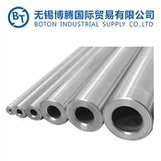
As a supplier of Hard Chrome Bars, I've witnessed firsthand the pivotal role that plating time plays in determining the quality of these products. In this blog, I'll delve into the effects of plating time on the quality of a hard chrome bar, exploring the science behind it and its practical implications.
The Basics of Chrome Plating
Chrome plating is an electro - deposition process where a thin layer of chromium is applied to a metal substrate. For hard chrome bars, this process enhances the bar's hardness, wear resistance, corrosion resistance, and aesthetic appeal. The plating process involves immersing the bar in an electrolyte solution containing chromium salts and passing an electric current through it. The chromium ions in the solution are then deposited onto the surface of the bar.
Impact of Plating Time on Thickness
One of the most direct effects of plating time is on the thickness of the chrome layer. The longer the plating time, the thicker the chrome layer will be. A thicker chrome layer generally provides better wear resistance. For applications where the bar is subject to high levels of friction and abrasion, such as in hydraulic cylinders, a thicker chrome layer can significantly extend the lifespan of the bar.
However, there is a limit to how thick the chrome layer can be. Excessively long plating times can lead to a very thick layer that may be prone to cracking. Cracks in the chrome layer can expose the underlying metal to corrosion, negating the benefits of the plating. Therefore, finding the optimal plating time to achieve the right thickness is crucial.
Influence on Surface Finish
Plating time also has a significant impact on the surface finish of the hard chrome bar. In the initial stages of plating, the chrome layer starts to form in a relatively smooth manner. As the plating time increases, the surface may become rougher if the process is not carefully controlled.
A longer plating time can cause the formation of nodules or bumps on the surface. These irregularities can affect the bar's performance, especially in applications where a smooth surface is required. For example, in precision machinery, a rough - surfaced hard chrome bar can lead to increased friction and reduced efficiency. On the other hand, a shorter plating time may result in an incomplete or patchy coating, which also affects the surface quality.
Corrosion Resistance
Corrosion resistance is a key quality parameter for hard chrome bars. A well - plated bar with an appropriate chrome layer thickness can provide excellent protection against corrosion. The plating time influences the integrity of the chrome layer, which in turn affects corrosion resistance.
A short plating time may result in a thin and porous chrome layer. This porous layer allows moisture and corrosive agents to penetrate through to the underlying metal, leading to corrosion. Conversely, a long plating time that results in a cracked chrome layer also compromises corrosion resistance. The cracks provide pathways for corrosive substances to reach the base metal. Therefore, an optimal plating time is necessary to form a dense and crack - free chrome layer that offers maximum corrosion protection.
Adhesion of the Chrome Layer
The adhesion of the chrome layer to the base metal is another important factor affected by plating time. During the plating process, the chrome atoms bond with the surface atoms of the base metal. If the plating time is too short, the bonding may not be strong enough, leading to poor adhesion. This can cause the chrome layer to peel off or flake during use.
On the other hand, if the plating time is too long, the stress within the chrome layer may increase, which can also weaken the adhesion. The optimal plating time allows for a strong and durable bond between the chrome layer and the base metal, ensuring that the chrome layer remains intact throughout the bar's service life.


Case Studies
Let's look at some real - world examples to illustrate the effects of plating time on the quality of hard chrome bars. In a manufacturing plant that produces High Precision Hard Chrome Plated Rod for automotive applications, they initially used a relatively short plating time. The rods had a thin chrome layer, and after a short period of use, they started to show signs of wear and corrosion.
After increasing the plating time, the thickness of the chrome layer increased, and the wear resistance improved significantly. However, when they further extended the plating time without proper control, the surface became rough, and the rods did not meet the precision requirements. After some experimentation, they found the optimal plating time that provided a smooth surface, appropriate thickness, and excellent wear and corrosion resistance.
In another case, a company producing Hollow Chrome Rod for hydraulic systems experienced issues with the adhesion of the chrome layer. They discovered that a very short plating time was the cause. By adjusting the plating time to an appropriate level, they were able to improve the adhesion, and the rods became more reliable in the hydraulic systems.
Finding the Optimal Plating Time
Determining the optimal plating time requires a combination of scientific knowledge and practical experience. Factors such as the composition of the electrolyte solution, the current density, and the type of base metal all influence the plating process.
In general, it is advisable to conduct a series of tests with different plating times on sample bars. These samples can then be evaluated for thickness, surface finish, corrosion resistance, and adhesion. By analyzing the results, the optimal plating time can be determined for a specific application.
Conclusion
As a supplier of Chrome Plated Bar, I understand the importance of getting the plating time right. The quality of a hard chrome bar is directly affected by the plating time, which impacts thickness, surface finish, corrosion resistance, and adhesion.
Finding the optimal plating time is a delicate balance that requires careful consideration of various factors. By doing so, we can ensure that our hard chrome bars meet the highest quality standards and provide long - lasting performance in a wide range of applications.
If you are in the market for high - quality hard chrome bars and want to discuss your specific requirements, I encourage you to reach out for a detailed procurement discussion. We are committed to providing you with the best products and solutions tailored to your needs.