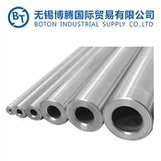
Hey there! As a supplier of pneumatic piston rods, I've had my fair share of questions about these nifty little components. One question that pops up a lot is, "What is the efficiency of a pneumatic piston rod?" Well, let's dive right in and break it down.
First off, let's talk about what a pneumatic piston rod actually does. In a nutshell, it's a key part of a pneumatic cylinder. When compressed air is pumped into the cylinder, it pushes the piston, and the piston rod transfers that linear motion to whatever it's connected to. This could be a valve, a gripper, or some other mechanical device in an industrial setting.
So, how do we measure the efficiency of a pneumatic piston rod? There are a few factors to consider.
1. Friction
Friction is the enemy of efficiency. When the piston rod moves inside the cylinder, there's friction between the rod and the seals, as well as between the rod and the air itself. The less friction there is, the more efficiently the rod can transfer the force from the compressed air to the load.
To reduce friction, we use high - quality materials and advanced manufacturing processes. For example, our Chrome Plated Piston Rod has a smooth chrome surface that reduces friction significantly. The chrome plating also provides excellent corrosion resistance, which means the rod will last longer and maintain its efficiency over time.
2. Material Strength
The strength of the piston rod material is crucial. If the rod bends or breaks under load, it won't be able to transfer the force effectively, and the efficiency will drop. That's why we offer a range of materials, each chosen for its specific properties.
Our 1045 Hollow Piston Rod is made from 1045 steel, which is known for its good strength and toughness. The hollow design not only reduces the weight of the rod but also helps to improve its overall strength - to - weight ratio. This means that it can handle heavy loads without sacrificing efficiency.
3. Precision Manufacturing
Precision is everything when it comes to pneumatic piston rods. A rod that's not manufactured to the right specifications can cause all sorts of problems, like uneven movement, leakage, and reduced efficiency.
We use state - of - the - art manufacturing equipment to ensure that our piston rods are made with the highest level of precision. Our Stainless Steel Precision Bar is a great example. It's machined to tight tolerances, which means it fits perfectly inside the cylinder and moves smoothly, maximizing efficiency.
4. Seal Design
The seals in a pneumatic cylinder play a vital role in the efficiency of the piston rod. They prevent air leakage and keep the rod moving smoothly. If the seals are not designed properly, air can leak out, reducing the pressure inside the cylinder and decreasing the force that the rod can exert.
We design our seals to be durable and effective. They're made from high - quality materials that can withstand the pressure and temperature changes in a pneumatic system. This helps to maintain the efficiency of the piston rod by ensuring that the air pressure is used effectively.


How Efficiency Affects Your Operations
The efficiency of a pneumatic piston rod can have a big impact on your operations. If the rod is efficient, it means that your pneumatic system will use less compressed air to achieve the same results. This can lead to significant cost savings in the long run, as compressed air is often one of the most expensive utilities in an industrial setting.
An efficient piston rod also means less wear and tear on your equipment. Since the rod moves smoothly and doesn't experience excessive friction or stress, it will last longer and require less maintenance. This can reduce downtime and increase the overall productivity of your operations.
Real - World Examples
Let's take a look at a couple of real - world examples to see how the efficiency of a pneumatic piston rod can make a difference.
Imagine a manufacturing plant that uses pneumatic cylinders to operate a series of conveyor belts. If the piston rods in these cylinders are inefficient, the cylinders will require more compressed air to move the belts. This not only increases the energy costs but also puts more strain on the compressor, which may lead to more frequent breakdowns.
On the other hand, if the plant uses our high - efficiency piston rods, the cylinders will use less air, reducing energy costs and extending the life of the compressor. The belts will also move more smoothly, improving the overall quality of the manufacturing process.
Another example is in the automotive industry. Pneumatic piston rods are used in many applications, such as brake systems and engine valves. An efficient piston rod in a brake system can ensure that the brakes engage quickly and smoothly, improving safety. In an engine valve, it can help to optimize the air - fuel mixture, leading to better fuel efficiency and performance.
Conclusion
So, to sum it up, the efficiency of a pneumatic piston rod depends on several factors, including friction, material strength, precision manufacturing, and seal design. By choosing high - quality piston rods like the ones we offer, you can improve the efficiency of your pneumatic systems, save money on energy costs, and increase the productivity of your operations.
If you're interested in learning more about our pneumatic piston rods or have any questions about how they can benefit your business, don't hesitate to reach out. We're here to help you find the right solution for your needs. Whether you're in the manufacturing, automotive, or any other industry, we've got the expertise and the products to keep your operations running smoothly.
Let's have a chat and see how we can work together to improve your efficiency and bottom line.
References
- Fluid Power Handbook, various authors
- Pneumatic System Design and Application Guide, industry publication