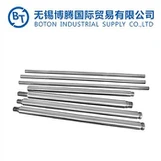
In cryogenic applications, the proper insulation of stainless steel cylinder rods is crucial to ensure their efficient and safe operation. As a leading supplier of Stainless Steel Cylinder Rods, I understand the significance of this process and am here to share some valuable insights on how to insulate these rods effectively.
Understanding the Need for Insulation in Cryogenic Applications
Cryogenic applications involve extremely low temperatures, often below -150°C. At such temperatures, stainless steel cylinder rods can experience a range of issues if not properly insulated. Heat transfer from the surrounding environment can cause the rod to warm up, leading to thermal expansion and potential mechanical stress. This can result in reduced performance, increased wear and tear, and even structural damage over time.
Moreover, in cryogenic systems, maintaining a stable temperature is essential for the proper functioning of other components. Uncontrolled heat transfer to the rod can disrupt the temperature balance in the system, affecting the efficiency and reliability of the entire operation. Therefore, insulation serves as a barrier to minimize heat transfer and protect the rod and the overall system.
Types of Insulation Materials
When it comes to insulating stainless steel cylinder rods in cryogenic applications, several types of insulation materials can be considered. Each material has its own unique properties and advantages, and the choice depends on various factors such as the operating temperature, the required level of insulation, and the specific application requirements.
Foam Insulation
Foam insulation materials, such as polyurethane foam and polystyrene foam, are commonly used in cryogenic applications. These materials have low thermal conductivity, which means they can effectively reduce heat transfer. They are also lightweight and easy to install, making them a popular choice for insulating cylinder rods.
Polyurethane foam, in particular, is known for its excellent insulation properties and high strength. It can be sprayed or injected onto the rod surface, providing a seamless and uniform insulation layer. Polystyrene foam, on the other hand, is more rigid and has good dimensional stability. It is often used in the form of pre - fabricated panels that can be wrapped around the rod.
Fiberglass Insulation
Fiberglass insulation is another widely used material in cryogenic applications. It consists of fine glass fibers that trap air, creating a barrier against heat transfer. Fiberglass insulation is resistant to moisture, chemicals, and fire, making it suitable for a variety of environments.
It can be supplied in the form of blankets, mats, or tubes. For stainless steel cylinder rods, fiberglass blankets can be wrapped around the rod and secured with bands or tapes. This type of insulation is relatively inexpensive and easy to install, but it may require additional protection to prevent the fibers from becoming loose and causing health hazards.
Aerogel Insulation
Aerogel is a high - performance insulation material that has gained popularity in recent years, especially in cryogenic applications. It is extremely lightweight and has an extremely low thermal conductivity, making it one of the most effective insulation materials available.
Aerogel insulation can be in the form of blankets or panels. It can be easily wrapped around the stainless steel cylinder rod, providing a thin but highly efficient insulation layer. Although aerogel insulation is more expensive than other materials, its superior insulation properties can result in long - term cost savings by reducing energy consumption.
Insulation Installation Process
Once the appropriate insulation material has been selected, the next step is to install it on the stainless steel cylinder rod. The installation process should be carried out carefully to ensure that the insulation layer is continuous and free of gaps or defects.
Surface Preparation
Before applying the insulation, the surface of the stainless steel cylinder rod must be clean and dry. Any dirt, grease, or rust on the surface can affect the adhesion of the insulation material and reduce its effectiveness. The surface can be cleaned using a suitable solvent or degreaser, followed by sanding or brushing to remove any rough spots.


Wrapping or Application
If using a blanket - type insulation material, such as fiberglass or aerogel, it should be wrapped around the rod tightly. Start from one end of the rod and wrap the blanket in a spiral motion, overlapping the edges by a few centimeters to ensure a continuous insulation layer. Secure the blanket with bands or tapes at regular intervals to prevent it from slipping.
For foam insulation materials, such as polyurethane foam, the application process may involve spraying or injecting the foam onto the rod surface. This should be done in a well - ventilated area following the manufacturer's instructions. The foam will expand and cure to form a solid insulation layer.
Sealing and Protection
After the insulation is installed, it is important to seal any joints or seams to prevent heat leakage. This can be done using a suitable sealant or tape. Additionally, the insulation layer may need to be protected from mechanical damage, moisture, and other environmental factors. A protective coating or jacket can be applied over the insulation to provide this protection.
Quality Control and Testing
Once the insulation is installed, it is essential to conduct quality control and testing to ensure its effectiveness. This can involve measuring the thermal conductivity of the insulation layer using a thermal conductivity meter. The measured value should be within the acceptable range specified by the application requirements.
Visual inspection can also be carried out to check for any signs of damage or gaps in the insulation layer. If any issues are detected, they should be addressed immediately to ensure the proper functioning of the stainless steel cylinder rod in cryogenic applications.
Conclusion
Insulating stainless steel cylinder rods in cryogenic applications is a critical process that requires careful consideration of the insulation material, installation method, and quality control. As a supplier of Stainless Steel Cylinder Rods, we offer a wide range of products, including Hollow Piston Rod, 42CrMo Piston Rod, and Precision Piston Rod. We can also provide guidance and support on the insulation process to ensure that our customers' needs are met.
If you are in the market for high - quality stainless steel cylinder rods or need assistance with cryogenic insulation, please do not hesitate to contact us. Our team of experts is ready to discuss your requirements and provide you with the best solutions for your application.
References
- "Cryogenic Insulation Handbook", edited by K. D. Timmerhaus and M. A. Flynn.
- "Thermal Insulation Materials: Properties and Applications", by R. P. Chandra.
- Manufacturer's technical data sheets for various insulation materials.