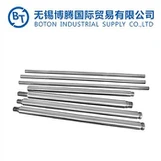
Hey there! I'm a supplier of Chrome Plated Steel Bars, and I know how crucial it is to have a smooth chrome plating on steel bars. Smooth chrome plating not only enhances the appearance of the steel bars but also improves their durability and corrosion resistance. In this blog, I'll share some tips on how to improve the chrome plating smoothness on steel bars.
1. Surface Preparation
The first step in achieving a smooth chrome plating is proper surface preparation. The steel bar's surface needs to be clean, free of rust, scale, and other contaminants. Any impurities on the surface can cause uneven plating and rough spots.
- Mechanical Cleaning: Start by using mechanical methods to clean the surface. This can include sandblasting, grinding, or polishing. Sandblasting is a great way to remove rust and scale quickly. It uses high - pressure air to propel abrasive particles at the steel surface. Grinding can be used to smooth out rough areas and remove any large imperfections. Polishing gives the surface a fine finish, which is essential for a smooth chrome plating.
- Chemical Cleaning: After mechanical cleaning, the steel bar should be chemically cleaned. This involves using degreasers to remove any oils, greases, or fingerprints. A common degreaser is a mixture of alkaline salts and surfactants. The steel bar is usually immersed in the degreasing solution for a certain period, depending on the level of contamination. Then, it's rinsed thoroughly with clean water to remove any traces of the degreaser.
- Pickling: Pickling is another important step in surface preparation. It involves immersing the steel bar in an acidic solution, usually hydrochloric acid or sulfuric acid. Pickling removes any remaining oxides and scales from the surface, creating a fresh and reactive surface for chrome plating. However, pickling needs to be carefully controlled to avoid over - etching the steel surface.
2. Bath Composition
The composition of the chrome plating bath plays a significant role in the smoothness of the plating.
- Chrome Concentration: The concentration of chrome in the bath is crucial. A proper chrome concentration ensures a uniform deposition of chrome on the steel bar. If the chrome concentration is too low, the plating may be thin and patchy. On the other hand, if it's too high, it can lead to rough and uneven plating. The ideal chrome concentration in a typical chrome plating bath is usually in the range of 150 - 300 grams per liter.
- Additives: Additives are often used in the chrome plating bath to improve the plating quality. Brighteners are one type of additive that can enhance the smoothness and brightness of the chrome plating. They work by promoting a more even deposition of chrome atoms on the steel surface. Leveling agents are another important additive. They help to fill in any small surface irregularities, resulting in a smoother plating.
- pH Level: The pH level of the plating bath also affects the plating quality. Most chrome plating baths operate at a low pH, usually around 0.5 - 1.5. Maintaining the correct pH level is essential for the proper dissolution of chrome salts and the deposition of chrome on the steel bar. A pH that is too high or too low can cause problems such as poor adhesion, rough plating, or uneven thickness.
3. Plating Process Parameters
Controlling the plating process parameters is essential for achieving a smooth chrome plating.
- Temperature: The temperature of the plating bath has a significant impact on the plating quality. A higher temperature generally increases the plating rate, but it can also cause problems such as rough plating and excessive hydrogen evolution. The ideal temperature for chrome plating is usually in the range of 50 - 60 degrees Celsius. Maintaining a stable temperature throughout the plating process is crucial for a smooth and uniform plating.
- Current Density: Current density is the amount of current per unit area of the steel bar surface. It affects the thickness and smoothness of the chrome plating. A too - low current density can result in a thin and patchy plating, while a too - high current density can cause burning and rough plating. The optimal current density for chrome plating on steel bars is typically in the range of 20 - 60 amperes per square decimeter.
- Plating Time: The plating time determines the thickness of the chrome plating. Longer plating times result in thicker plating, but if the time is too long, it can lead to rough and uneven plating. It's important to calculate the plating time based on the desired plating thickness and the plating rate, which is affected by the bath composition, temperature, and current density.
4. Post - Plating Treatment
After the chrome plating is complete, post - plating treatment can further improve the smoothness and quality of the plating.


- Buffing and Polishing: Buffing and polishing the plated steel bar can remove any minor surface imperfections and give it a high - gloss finish. This process involves using abrasive wheels or belts with different grit sizes to gradually smooth and shine the surface.
- Passivation: Passivation is a chemical treatment that can improve the corrosion resistance of the chrome plating. It involves immersing the plated steel bar in a passivating solution, usually a solution of chromic acid or other oxidizing agents. Passivation forms a thin, protective oxide layer on the surface of the chrome plating, which helps to prevent corrosion and maintain the smoothness of the surface.
Our Products
As a Chrome Plated Steel Bar supplier, we offer a wide range of high - quality products. Our High Precision Hard Chrome Plated Rod is known for its excellent smoothness and high precision. It's widely used in various industries such as automotive, hydraulic, and machinery. Our Chrome Plated Bar is also a popular choice, offering good corrosion resistance and a smooth surface finish. And for those who need a specific type of steel, our S45C Chrome Bar is made from high - quality S45C steel and has a smooth chrome plating.
If you're interested in our Chrome Plated Steel Bars or have any questions about improving chrome plating smoothness, feel free to contact us for procurement and further discussion. We're always happy to help you find the best solutions for your needs.
References
- "Handbook of Electroplating Engineering" by John D. Durney
- "Electroplating for Engineers" by George Safranek
So, that's it for today's blog. I hope these tips will help you improve the chrome plating smoothness on steel bars. If you have any other questions or need more information, don't hesitate to reach out.