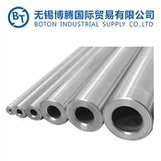
Hey there! As a supplier of 1045 Hydraulic Piston Rods, I often get asked about the quenching temperature of these rods. It's a crucial topic, as the quenching process significantly impacts the rod's performance and durability. So, let's dive right in and explore what the quenching temperature of the 1045 Hydraulic Piston Rod is all about.
First off, let's understand what 1045 steel is. 1045 steel is a medium-carbon steel that's widely used in various applications, including hydraulic piston rods. It has a good balance of strength, toughness, and machinability, making it a popular choice for many industries. The "10" in 1045 indicates the plain carbon steel classification, and the "45" represents the approximate carbon content of 0.45%.
Quenching is a heat treatment process where the steel is heated to a specific temperature and then rapidly cooled. This process changes the microstructure of the steel, increasing its hardness and strength. For 1045 steel, the quenching temperature typically ranges from 820°C to 870°C (1508°F to 1598°F). But why this specific range?
Well, at temperatures below 820°C, the steel might not fully transform into austenite, a phase of steel that's necessary for the quenching process to work effectively. On the other hand, if the temperature goes above 870°C, the grains in the steel can grow too large, which can lead to reduced toughness and increased brittleness. So, the 820°C - 870°C range is a sweet spot that allows for optimal transformation and results in a well-balanced combination of hardness and toughness.
Once the 1045 Hydraulic Piston Rod reaches the appropriate quenching temperature, it's quickly immersed in a quenching medium. The most common quenching mediums are water, oil, and polymer solutions. Each medium has its own cooling rate, which affects the final properties of the steel.
Water is the fastest quenching medium. It cools the steel very rapidly, resulting in high hardness. However, this rapid cooling can also cause high internal stresses and cracking in the rod. Oil, on the other hand, cools the steel at a slower rate than water. This slower cooling reduces the risk of cracking but also results in lower hardness compared to water quenching. Polymer solutions offer a middle ground. They can be adjusted to provide a cooling rate between that of water and oil, allowing for a good balance of hardness and reduced risk of cracking.
After quenching, the 1045 Hydraulic Piston Rod is usually tempered. Tempering is another heat treatment process where the rod is heated to a lower temperature (usually between 150°C and 650°C or 302°F and 1202°F) and then slowly cooled. This process relieves the internal stresses created during quenching and improves the rod's toughness without significantly reducing its hardness.
Now, let's talk about the importance of getting the quenching temperature right for 1045 Hydraulic Piston Rods. In hydraulic systems, these rods are subjected to high pressures, friction, and wear. A rod with the right hardness and toughness can withstand these conditions better, leading to longer service life and fewer breakdowns.
For example, if the quenching temperature is too low, the rod might not be hard enough. This can result in premature wear, deformation, and failure of the rod. On the other hand, if the quenching temperature is too high, the rod can become too brittle, increasing the risk of cracking under stress.
As a supplier, we take great care in ensuring that our 1045 Hydraulic Piston Rods are quenched at the optimal temperature. We use advanced heat treatment equipment and strict quality control measures to make sure that each rod meets the highest standards.
If you're in the market for high-quality hydraulic piston rods, we also offer other types, such as CK45 Piston Rod, Hollow Piston Rod, and CK45 Hydraulic Piston Rod. These rods are also heat-treated to ensure excellent performance and durability.
In conclusion, the quenching temperature of 1045 Hydraulic Piston Rods is a critical factor that affects their performance and longevity. By quenching the rods at the right temperature and using the appropriate quenching medium and tempering process, we can produce rods that are strong, tough, and reliable.
If you're interested in learning more about our 1045 Hydraulic Piston Rods or any of our other products, feel free to reach out to us. We're always happy to discuss your specific requirements and provide you with the best solutions for your hydraulic systems. Let's start a conversation and see how we can work together to meet your needs.


References
- "Metallurgy for the Non-Metallurgist" by J. R. Davis
- "Heat Treatment Principles and Techniques" by R. A. Grange, D. K. Matlock, and H. W. Smith