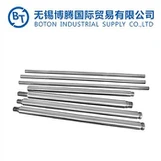
As a supplier of Hard Chrome Bars, I often get asked whether these bars can be used in high - temperature environments. It's a valid question, especially considering the wide range of applications where high temperatures are involved. So, let's dig into this topic and see what the deal is.
First off, let's understand what hard chrome bars are. A Hard Chrome Bar is a steel bar that has been coated with a layer of hard chrome through a process called electroplating. This chrome layer gives the bar some great properties like high hardness, excellent wear resistance, and good corrosion resistance. It's commonly used in various industries such as automotive, hydraulic, and machinery.
Now, when it comes to high - temperature environments, things get a bit tricky. Chrome has a relatively high melting point, around 1907°C (3465°F). That sounds pretty good, right? But the real issue isn't just about the melting point. When exposed to high temperatures, the properties of the hard chrome layer can change.
One of the main concerns is the thermal expansion. Different materials expand at different rates when heated. The steel bar and the chrome layer have different coefficients of thermal expansion. So, when the temperature rises, the steel bar and the chrome layer expand at different speeds. This can cause stress at the interface between the two, and over time, it might lead to cracking or delamination of the chrome layer.
Another factor is the oxidation of the chrome layer. At high temperatures, chrome can react with oxygen in the air to form chromium oxide. This oxidation process can gradually degrade the chrome layer, reducing its hardness and wear resistance. The extent of oxidation depends on the temperature, the duration of exposure, and the presence of other elements in the environment.
However, it doesn't mean that hard chrome bars can't be used in high - temperature environments at all. It depends on the specific temperature range and the requirements of the application.
For relatively low - high - temperature applications, say up to around 200 - 300°C (392 - 572°F), hard chrome bars can usually hold up quite well. In these cases, the thermal expansion and oxidation effects are relatively minor. For example, in some industrial ovens where the temperature is in this range, hard chrome bars can be used for guiding or supporting components.
But if the temperature goes much higher, say above 500°C (932°F), it becomes a different story. The chrome layer will start to degrade more rapidly, and the risk of cracking and delamination increases significantly. In such cases, alternative materials or coatings might be a better choice.
There are also some ways to improve the performance of hard chrome bars in high - temperature environments. One approach is to use a pre - treatment process before chrome plating. This can help to improve the adhesion between the steel bar and the chrome layer, making it more resistant to thermal stress. Another option is to use a post - treatment process, such as heat treatment, to enhance the properties of the chrome layer.
Now, let's talk about some real - world applications. In the automotive industry, hard chrome bars are used in engine components. While engines do get hot, the operating temperatures are usually within a range where hard chrome bars can function properly. The chrome layer helps to reduce friction and wear, improving the efficiency and lifespan of the components.
In the hydraulic industry, High Precision Hard Chrome Plated Rod are often used in cylinders. These rods need to withstand high pressures and some degree of heat. As long as the temperature doesn't exceed the limits, hard chrome plating provides the necessary wear and corrosion resistance.
In the machinery industry, Chrome Plated Bar are used in various moving parts. Some of these parts might be exposed to high temperatures during operation. Again, the suitability of hard chrome bars depends on the specific temperature conditions.
If you're considering using hard chrome bars in a high - temperature application, it's important to do some testing first. You can simulate the high - temperature environment in a laboratory and see how the bars perform. This will give you a better idea of whether hard chrome bars are the right choice for your needs.
As a supplier, I'm always here to help you make the best decision. If you have any questions about the performance of hard chrome bars in high - temperature environments, or if you're interested in purchasing our products, feel free to reach out. We can discuss your specific requirements and provide you with the most suitable solutions.


In conclusion, hard chrome bars can be used in some high - temperature environments, but it's crucial to understand the limitations and take appropriate measures. With the right approach, you can make the most of the excellent properties of hard chrome bars even in challenging conditions.